Traditional Kalarippayattu
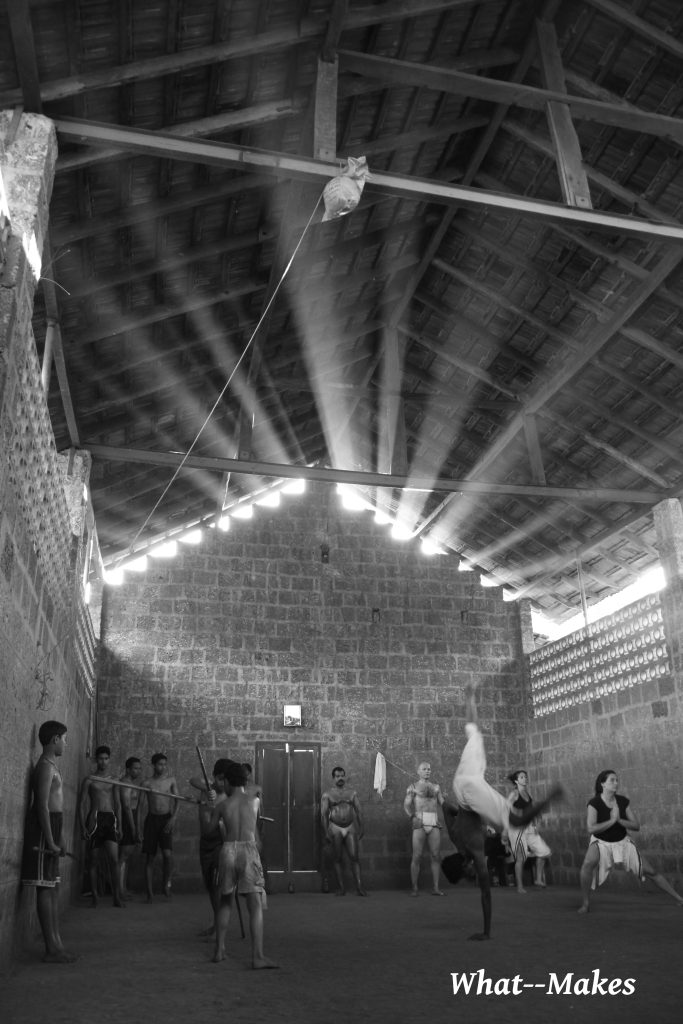
Kalarippayat originates from Kerala, a coastal state in South India. It is probably the oldest martial art still practised today in its ancestral form, as suggested by its mythical origins and the history of India. It has thus influenced numerous styles across Asia, including the renowned martial arts of Shaolin. After being eclipsed during the period of British occupation, it experienced a renaissance and its practice remains very much alive today, seemingly carried by the cultural reaffirmation of contemporary India.
Rich in a multi-millennial history and diverse influences, what is referred to as Kalarippayat is not a uniform whole. In reality, there are two major styles, known as the Northern tradition (Vaddhakan Sampradayanam) and the Southern tradition (Thekkan Sampradayanam), alongside which exists a third, more confidential style known as the Central tradition (Madhya Sampradayanam).
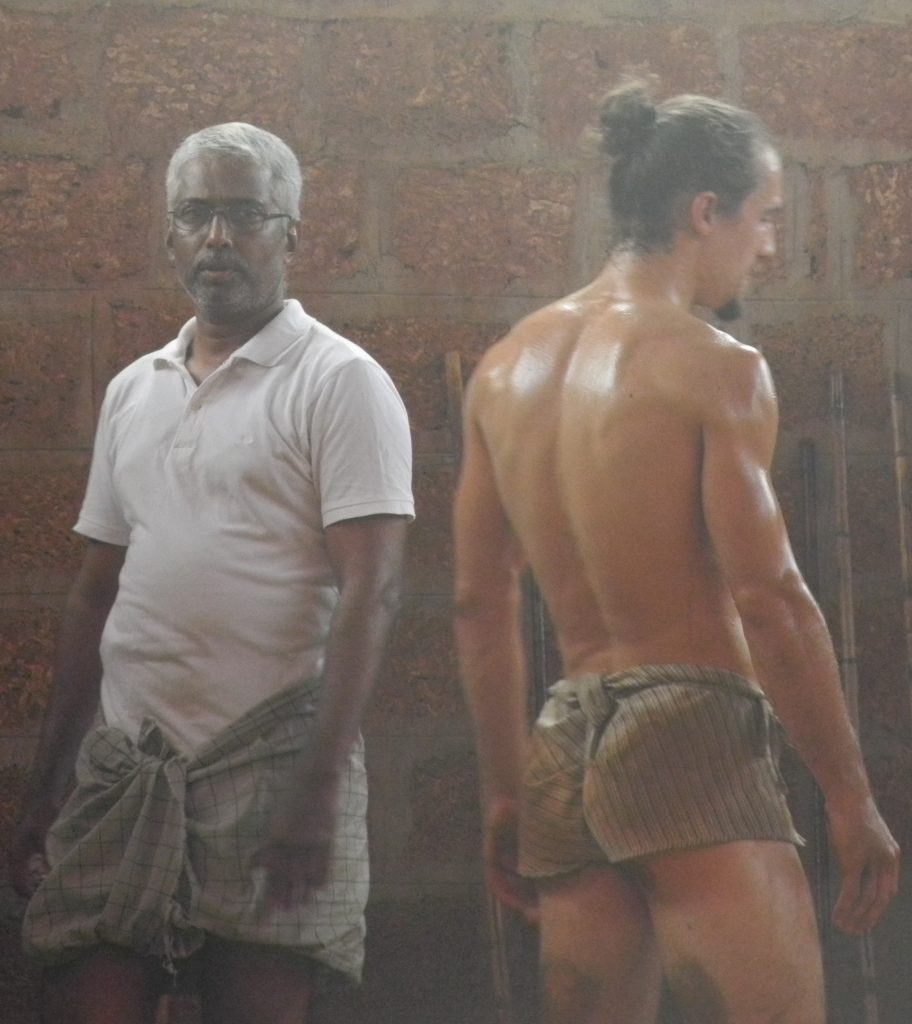
I had the opportunity to be initiated into each of these styles by my master C.M. Sherif Gurukkal within the Kerala Kalarippayattu Academy, which has trained numerous teachers, both Indian and Western.
Finally, as is the case in most traditional martial arts, Kalarippayat also includes a rich therapeutic system resulting from various influences such as Ayurveda or Siddha medicine, while possessing its own specificities. If you wish to discover the many benefits of this multi-millennial practice, I invite you to consult the articles below.

Here below 2019 Article ↓ – New Articles , presenting Oli specific approach and martial artist background are coming soon …
1.2 Traditional Kalarippayattu
1.2.1 Cultural Context
1.2.1.1 South India :
1.2.1.2 Origins :
1.2.1.3 Influences :
1.2.1.4 Contemporary :
1.2.2 The Different Styles
1.3 Kalarippayattu Healing
1.4 C. M. Sherif Gurukkal / The KKA Academy
______________________________________
Kalaripayattu is the traditional Martial and Healing Art from Kerala (South India). Its roots are deeply connected to other Indian practices such as Yoga, Ayurveda and Tantra.
Kalari is known as the oldest martial art in the world. It influenced other arts in Asia like the famous Shaolin Kung-fu. Kalari is divided in two main styles : Vadakkan (Northern style) and Thekhan (Southern style). Very rarely, some schools also teach the less known Madhya Kalari (Central Style), a branch of Kalari that creates bridges between the two other, and widely spread Kalari styles.
Due to its diversity and ancient roots, the practice of Kalaripayattu has multiple benefits and can meet the expectations of practitioners of different backgrounds. Martial Artists will discover a complete fighting system including strikes, throws, locks and the use of many weapons . Yogis will enjoy the similarities of body postures practiced in a very dynamic and ongoing flow. Dancers will be seduced by the grace of body forms and the variations of footwork. Ayurvedic Massage Therapists will appreciate the grounding and power effect of low stances as well as the differences and similarities of the flow rhythm and of the work on Nadis.
Kalari increases flexibility, strength, coordination, balance and grounding. Moreover, it boosts self-confidence and helps dealing with conflicting relationships. As other Indian Sadhana, Kalari is also a self-development path, a way to connect to our inner self and awake the Kundalini improving Prana flow.
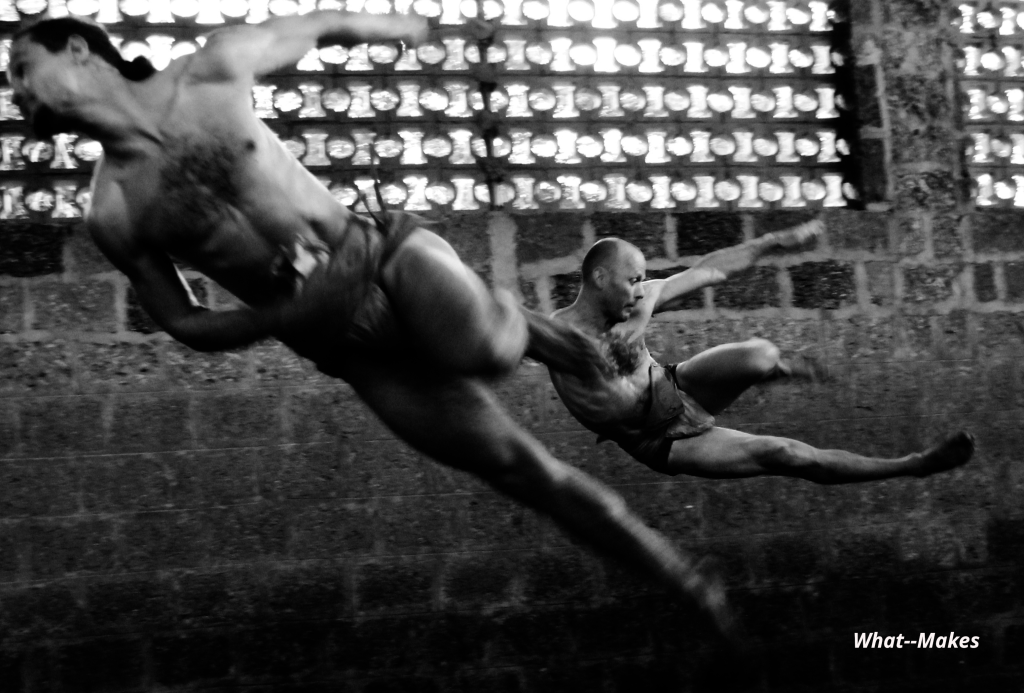
Kalari is taught from the age of 7 up to 60, depending on practitioners’ body condition. Teachings will be adjusted to students’ background and expectations.