

Oli Kalari
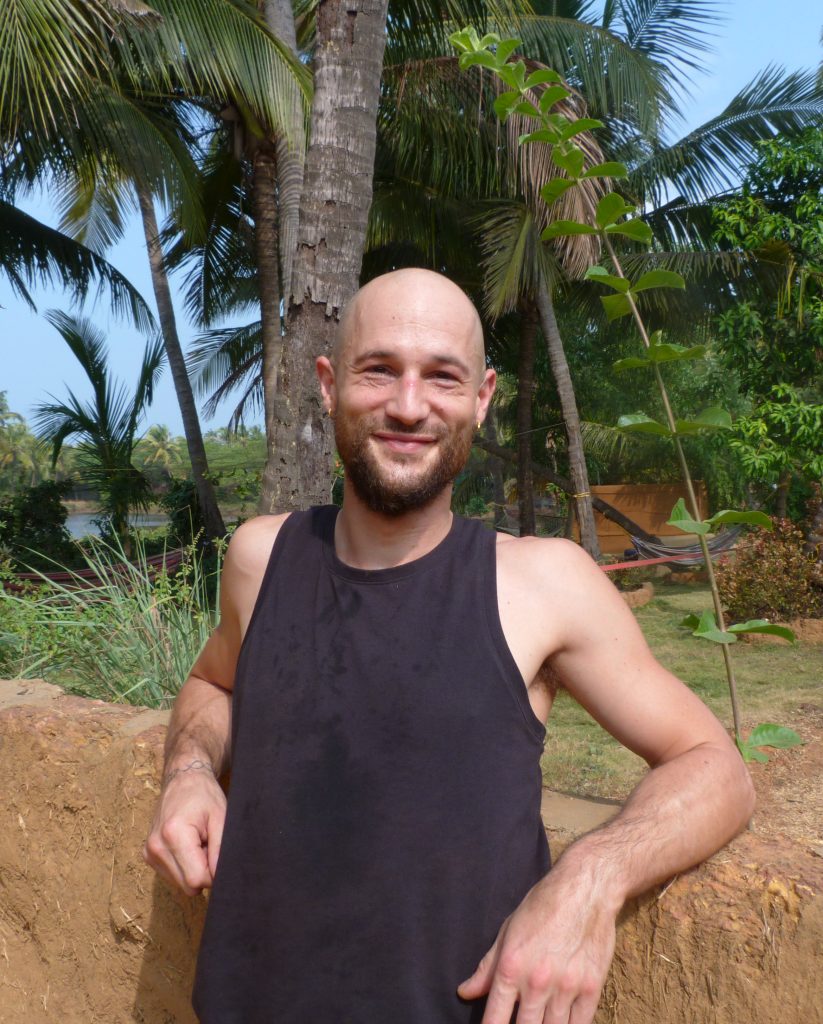
I strive to teach what one might call the Primordial or Principial Martial Art, considering that the diversity of contemporary styles, like that of cultures, are varied manifestations of the principles and archetypes that the human body can express. Without claiming to have exhausted the subject, it is rather a question of presenting the quest that animates and guides me as a teacher, researcher, and practitioner of martial arts.
Upon discovering Kalarippayattu, I immediately noticed similarities with other arts — particularly with Wu-shu (Chinese Martial Arts) — which enabled me to learn rapidly. That said, it is through teaching and exchanging with other practitioners from various disciplines that I have progressively elaborated the framework of my teaching, through which I strive to integrate everything I have had the opportunity to learn in the form of an archetypal synthesis allowing navigation between the arts.
In so doing, I frequently rely on the forms and exercises of Kalarippayattu to transmit the principles or adapt the methods I have practised in other styles, and vice versa. For me, this is not about creating a new style or fusing scattered fragments, but rather about ensuring that what I transmit is functional and coherent with the teachings contained in other equally valid disciplines, each possessing its own specificities that allow better illumination of this or that aspect of martial or energetic practice.
One day my master told me: “I transmit to you a skeleton that once also had flesh and skin.” Now my master C. M. Sherif Gurukkal studied the art of Kalarippayattu with passion under different Gurukkals and is among those who have perpetuated a very rich tradition that he has never ceased to deepen. It goes without saying that I have not received the entirety of his knowledge and that if he himself does not claim to have preserved the totality of the tradition, I cannot decently claim to do so. That said, this phrase opened for me a space of research, and our numerous exchanges concerning martial applications, the functioning of the subtle body, parallels with physiotherapy, or different spiritual traditions have driven me to seek what might be “the flesh and the skin,” relying on the structure of the “skeleton” he transmitted to me. What he humbly designated in this way — conscious that the Gurukkals of the past possessed a vaster knowledge than his own — remains nonetheless a magnificent structure, probably more “raw” and archetypal than that found in other more recent martial arts. This is one of the reasons why I consider Kalarippayattu as my “Root Art” and why it constitutes, whatever I teach, my fundamental base.
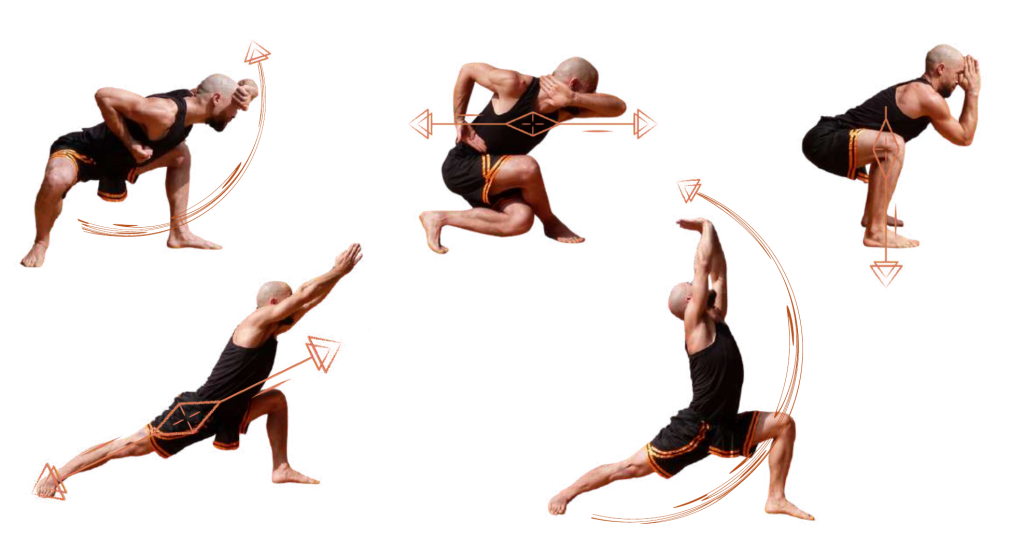
That said, I am always thirsty to learn and I strive to introduce into my teaching all the knowledge I have acquired in Kalarippayattu, but also through other practices and experiences. I start from the principle that one can only teach what one is and that, not having had a single master nor an exclusive practice, it is right that I share the whole of what has constituted my own path. I further consider that “there is nothing new except what has been forgotten” and that what has been forgotten in one tradition has not necessarily been forgotten in another. This is why I allow myself to draw from different sources when I teach, while taking care to distinguish what belongs to the traditional curriculum of my Kalarippayattu lineage and to specify what I borrow from other teachers and disciplines into which I have also been initiated.
Thus my ambition as a teacher is to transmit a universal framework of movement and to bring forth both the principles of combat and those of the consciousness of the subtle body, relying on the structure of Kalarippayattu which, more than fifteen years after discovering it, still appears to me as a raw diamond that I shape to my measure, without claiming to be able to exhaust it or to have access to everything this tradition contains.
My approach seeks to be faithful to the spirit of the Tradition — whose essence is immutable but whose form is ceaselessly in movement — which makes it unique and creative within the limit of respect for the principles that have been transmitted to me. I strive to restitute the essence of the Kalarippayattu tradition, while avoiding aping what does not belong to me and without seeking either to restrict myself as to the forms to be employed, freely using all those I have been permitted to assume, thus drawing abundantly from other Indian disciplines (Yoga / Tantra), other martial arts, combat sports (Wu-shu / Boxing) and movement arts (Circus, Mountain Sports) into which I have been initiated, and infusing the metaphysical concepts drawn from the various sources to which I have access.
This manner of proceeding was not premeditated; it imposed itself of its own accord in the course of teaching, and it is largely my students, rich in their own backgrounds, diverse in their sensibilities and capacities, who have inspired the adaptations and additions that are today integrated into my teaching. I believe it is natural that this should be so, and that I cannot restitute the spirit of what my master transmitted to me by seeking to imitate his pedagogy strictly, especially when addressing a public whose aspirations and possibilities differ from those that were mine when I studied with him.
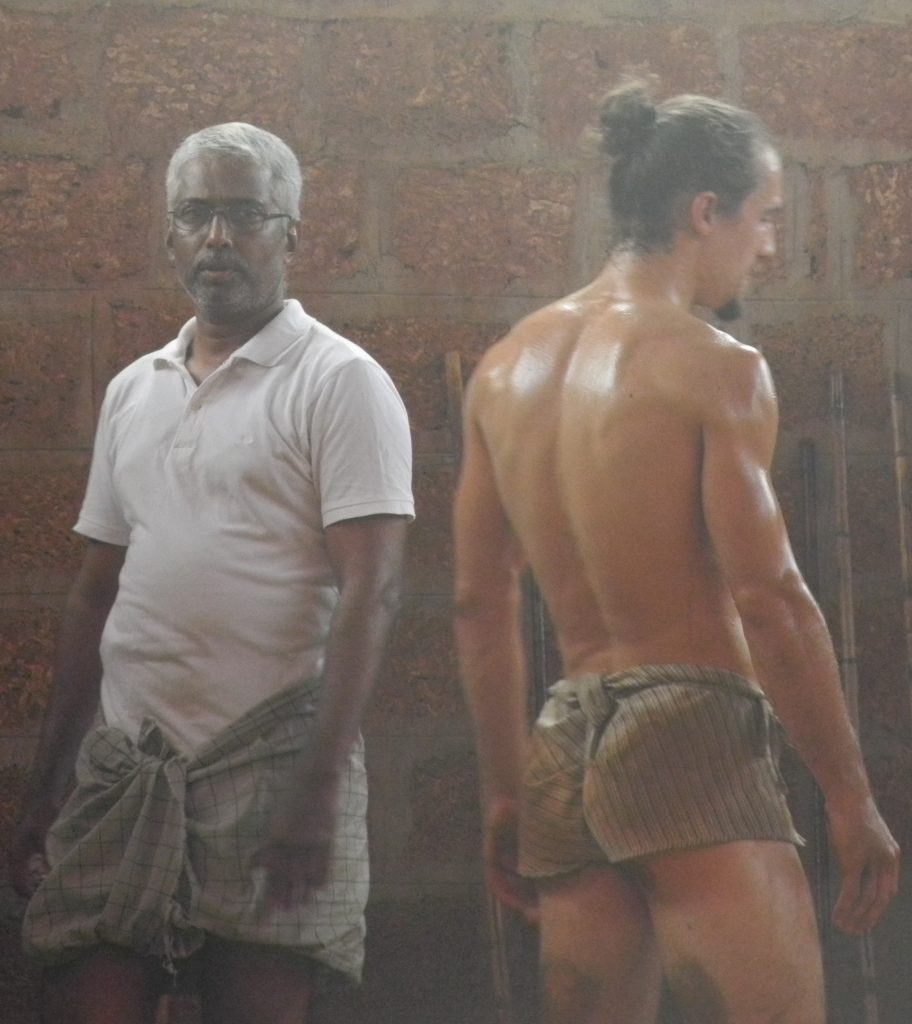
To study with me is therefore to gain access to a transmission of Kalarippayattu that is enriched and adapted to a Western public, which however cannot replace what I had the chance to encounter while studying it in India.
My Master taught me a great deal and generously transmitted to me a solid technical heritage in three styles, as well as the therapeutic foundations of Kalarippayattu. However, I do not possess his erudition on the one hand, and on the other the Keralite tradition (south-west of India) comprises aspects that it is impossible for me to restitute in the context within which I evolve: the tropical climate that permits the use of Ayurvedic oils during practice; the Kalari (training space) dug into the clayey soil of Kerala; Malayalam — the Keralite language of Tamil root — in which the verbal commands (Vaittari) are given; and many other aspects belonging to that land and that culture which welcomed and nourished me with gentleness and generosity. For those who feel the call, I can only recommend a stay in Kerala!
That said, I hope to be able to offer my students a link with Kerala and Traditional Kalarippayattu, teaching in French, English or Italian while striving to be in symbiosis with the places and the practitioners who are gathered. For this purpose I have structured my Teachings in the form of thematic entries, each of which is based on the traditional foundation that was transmitted to me while being enriched by what belongs to my own path.